25 mars 2010
Why putting your clock forward in spring and backward in autumn?
Par Nelly Sallibartan (Collège Germaine Tillion (91)) le 25 mars 2010, 23:53 - news
 Don't forget we lose an hour in the morning this week end.
A new species of human
Par Nelly Sallibartan (Collège Germaine Tillion (91)) le 25 mars 2010, 23:41 - news
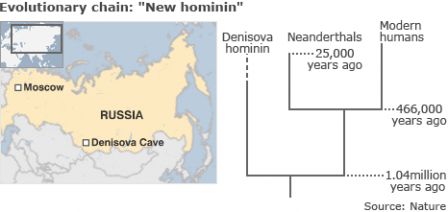 Scientists say that DNA taken from an ancient finger bone found in a
Siberian cave near the Altai region may belong to a previously unknown
type of pre-human. The scientists say the extinct "hominin" (human-like
creature) lived in Central Asia between 48,000 and 30,000 years ago.
The bones were found with a bracelet, and they've called this ancient
skeleton X-woman. One of the scientists Professor Colin Groves said
that they think she might be a new species that we didn't know existed
until now.
Scientists say that DNA taken from an ancient finger bone found in a
Siberian cave near the Altai region may belong to a previously unknown
type of pre-human. The scientists say the extinct "hominin" (human-like
creature) lived in Central Asia between 48,000 and 30,000 years ago.
The bones were found with a bracelet, and they've called this ancient
skeleton X-woman. One of the scientists Professor Colin Groves said
that they think she might be a new species that we didn't know existed
until now.
It changes our understanding in that we now know there was something different living in the Altai and perhaps elsewhere at the same time as there were Neanderthals in Europe and homosapiens in Africa and just emerging from Africa. But we don't know unfortunately what species this new thing was.
Any ideas to change your country ?
Par Nelly Sallibartan (Collège Germaine Tillion (91)) le 25 mars 2010, 23:25 - Enquiries
There's a big election coming up in the UK and Newsround has been asking children what they would change if they were Prime Minister. Here are some of their ideas.
If I was the Prime Minister for the day I would make schools have a lesson in being nice.If I was Prime Minister I would put solar panels on all houses.
If I was the Prime Minister I would let all children go swimming for free.
 We've just had elections too, so you may have some comments on this issue.
What would you do ?
More deers but fewer gorillas.
Par Nelly Sallibartan (Collège Germaine Tillion (91)) le 25 mars 2010, 23:00 - news
 Deer are becoming a more common site in our towns and cities. The
numbers of deer in the UK has exploded over the past couple of years -
there are said to be up to two million of them. They may look pretty, but in a built up area they can cause a lot of trouble. They damage
cars and gardens, spread diseases and can cause road accidents. Andy
Welsh is an expert in wildlife, and says it's dangerous because drivers
in cities don't expect deer to jump into the road.
Deer are becoming a more common site in our towns and cities. The
numbers of deer in the UK has exploded over the past couple of years -
there are said to be up to two million of them. They may look pretty, but in a built up area they can cause a lot of trouble. They damage
cars and gardens, spread diseases and can cause road accidents. Andy
Welsh is an expert in wildlife, and says it's dangerous because drivers
in cities don't expect deer to jump into the road.
In rural areas people are more likely to anticipate a deer being around. But in urban areas it's just not something you would think about or consider. But what's important to know if you're on a fast road that may be fenced, deer are still crossing. They don't worry about stock fences they just go straight across them.
I've seen some deers too around Lardy and some wild boars and you ?
Do you ever see wild animals in your area?
In central Africa there are big concerns gorillas are in danger of being wiped out. A new
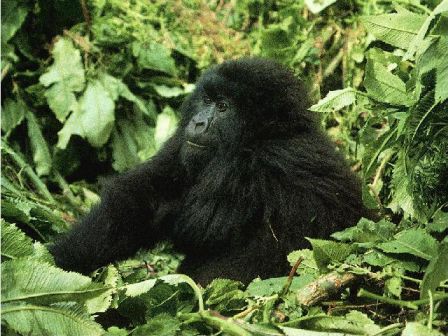 report by the United Nations says this will
happen within the next 10 to 15 years unless something is done to
protect them. They say too many are being killed or are being left
homeless because companies are pulling down trees in the rainforest.
report by the United Nations says this will
happen within the next 10 to 15 years unless something is done to
protect them. They say too many are being killed or are being left
homeless because companies are pulling down trees in the rainforest.
Chris Nellemann is an environmental expert. This is what he says : "What we are seeing now is that previous estimates from 2002, that only 10 percent of the gorillas would remain by 2030 were too optimistic. So we fear now that the gorillas may become extinct over most parts of their range within, perhaps less than 15 years from now."
That reminds me of a film and book we've got at the school library, do you know the title?
16 mars 2010
Discover St Patrick's day.
Par Nelly Sallibartan (Collège Germaine Tillion (91)) le 16 mars 2010, 22:50 - news

 Thanks to Mrs Haquet's lovely and very interesting book you'll know
 everything about this Irish celebration.
So wear some green and don't miss it, just click here
Happy St Patrick.
15 mars 2010
Some help to learn irregular verbs or just to revise them
Par Nelly Sallibartan (Collège Germaine Tillion (91)) le 15 mars 2010, 22:47 - documents 5th form
13 mars 2010
Get ready for the show : Jack and the beanstalk
Par Nelly Sallibartan (Collège Germaine Tillion (91)) le 13 mars 2010, 14:49 - documents 6th form
To understand the story better look at this video.
Then you can complete these worksheets and leave me a message in the comments.
11 mars 2010
Improve your listening comprehension 1
Par Nelly Sallibartan (Collège Germaine Tillion (91)) le 11 mars 2010, 16:22 - documents 4th form
As some of you find it difficult to understand oral english here are some selected recordings and exercise to help you practice.
I suggest you start by :
"Nice to meet you"
"Tell me about yourself "
and " where are you from"
on this site
Do you like playing cards? Do you prefer building things? Look at this Record-breaking house of cards.
Par Nelly Sallibartan (Collège Germaine Tillion (91)) le 11 mars 2010, 15:49 - Enquiries
You might like playing with cards at home, but check this out!
Bryan Berg has just broken his own Guinness World Record for building the largest free standing building out of packs of cards.
It's a model of the world's largest hotel and he used more than 200,000 cards to make it. And it took 44 days to complete!
See the huge model here...
 Now tell me :
Do you like playing cards?
Do you prefer building things?
Do you like records or competiton?
What records do you know?
What are your records?
10 mars 2010
Do you ski like this? Let's talk about sports or clothes!
Par Nelly Sallibartan (Collège Germaine Tillion (91)) le 10 mars 2010, 16:34 - documents 5th form
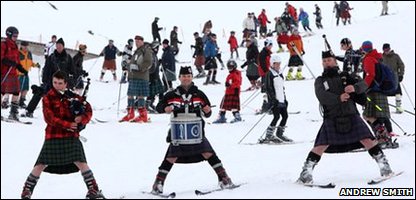
More than 200 skiers and snowboarders are hoping they've set a new record for the most people in kilts going down a piste!
They came down in a line from the Ptarmigan Top Station on CairnGorm Mountain, near Aviemore.
It's all in aid of a schools skiing programme and the rest will go to charity.
The world record attempt came during Scotland's best ski season in nine years, because of all the snow.
What about you?
Are you sporty?
Did you go skiing during the last holiday or are you going for the next ones? How often do you go? How well can you ski?
What are your favorite sports if you don't ski? Do you practise regularly? Are you in a team?
The fashion and you :
Do you like kilts? What clothes deo you like best? What are you wearing today?
Send me your comments.
« billets précédents - page 151 de 156 - billets suivants »