affiche_.pdf
17 juin 2015
You've got talent, show it next Tuesday
Par Nelly Sallibartan (Collège Germaine Tillion (91)) le 17 juin 2015, 20:45 - special days
The european day for the 3rd form.
Par Nelly Sallibartan (Collège Germaine Tillion (91)) le 17 juin 2015, 16:41 - documents 3rd form
What did you think about it ?
How did you enjoy this special day ?
What did you learn ?
What will you remember ?
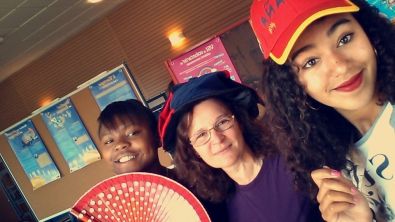
Personnally I had a good day with you and wanted to thank all the pupils who seriously did it, brought some things to taste and even made pictures not to forget it .
More about Jurassic world
Par Nelly Sallibartan (Collège Germaine Tillion (91)) le 17 juin 2015, 16:33 - documents 6th form
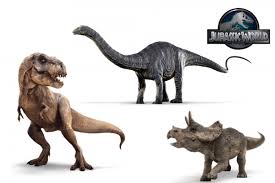
About Jurassic world.
Par Nelly Sallibartan (Collège Germaine Tillion (91)) le 17 juin 2015, 16:20 - documents 6th form
David asked me to put this on my blog because he wanted to share it with you.
16 juin 2015
Verbs competition : the results
Par Nelly Sallibartan (Collège Germaine Tillion (91)) le 16 juin 2015, 17:22 - documents 6th form
The best class is Artermis (15) the second class is Athena (14) and the third one is Gaia (13.5)
The student stars, those who know 120 verbs are:
Juliette D, Maxence G, David B, Pierrick G, Alexis R and Mathis G in the 6th form Gaia
Lucie A, Mateo G, Manon D and Lena R in the 6th form Athena
Simon P, Guilaume L, Zuzanna G, Theo A, Enzo L and Paul M in the 6th form Artemis
PAUL M is the great winner with 124 verbs followed by ENZO L with 123 verbs in the first test
Congratulations you've done very well. you can be proud of you!

The little house on the prairie
Par Nelly Sallibartan (Collège Germaine Tillion (91)) le 16 juin 2015, 07:37 - documents 4th form
For those who didn't know it.
15 juin 2015
A trail in my first american national park
Par Nelly Sallibartan (Collège Germaine Tillion (91)) le 15 juin 2015, 23:25
http://www.hikespeak.com/trails/general-grant-tree-kings-canyon/
09 juin 2015
Being me
Par Nelly Sallibartan (Collège Germaine Tillion (91)) le 09 juin 2015, 21:24 - documents 3rd form
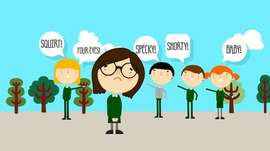
Newsround has made a special programme, called Being Me, exploring what kids think about their body image.
It's presented by Millie from Millie Inbetween, who asks why our appearance is such a big deal to so many of us.
The programme follows four children as they take part in an exercise to find out how they see themselves and popstar Meghan Trainor explains how she struggled with body image worries.
Watch this excellent video on this link.
08 juin 2015
I wish I was ...
Par Nelly Sallibartan (Collège Germaine Tillion (91)) le 08 juin 2015, 21:08 - documents 3rd form
04 juin 2015
Enter shakespeare's world with Macbeth
Par Nelly Sallibartan (Collège Germaine Tillion (91)) le 04 juin 2015, 19:32 - documents 3rd form
Macbeth: Michael Fassbender plays the tortured king of Shakespeare's great tragedy – trailer
Snowtown director Justin Kurzel's adaptation of William Shakespeare's tragic play stars Michael Fassbender as Macbeth, the warrior turned traitor who murders his king and spirals into madness. The film, which had its premiere at last month's Cannes film festival and is released in the UK on 2 October, also stars Marion Cotillard as Lady Macbeth, tortured by insatiable ambition
« billets précédents - page 91 de 156 - billets suivants »